
Weekly analysis
By: Editorial team
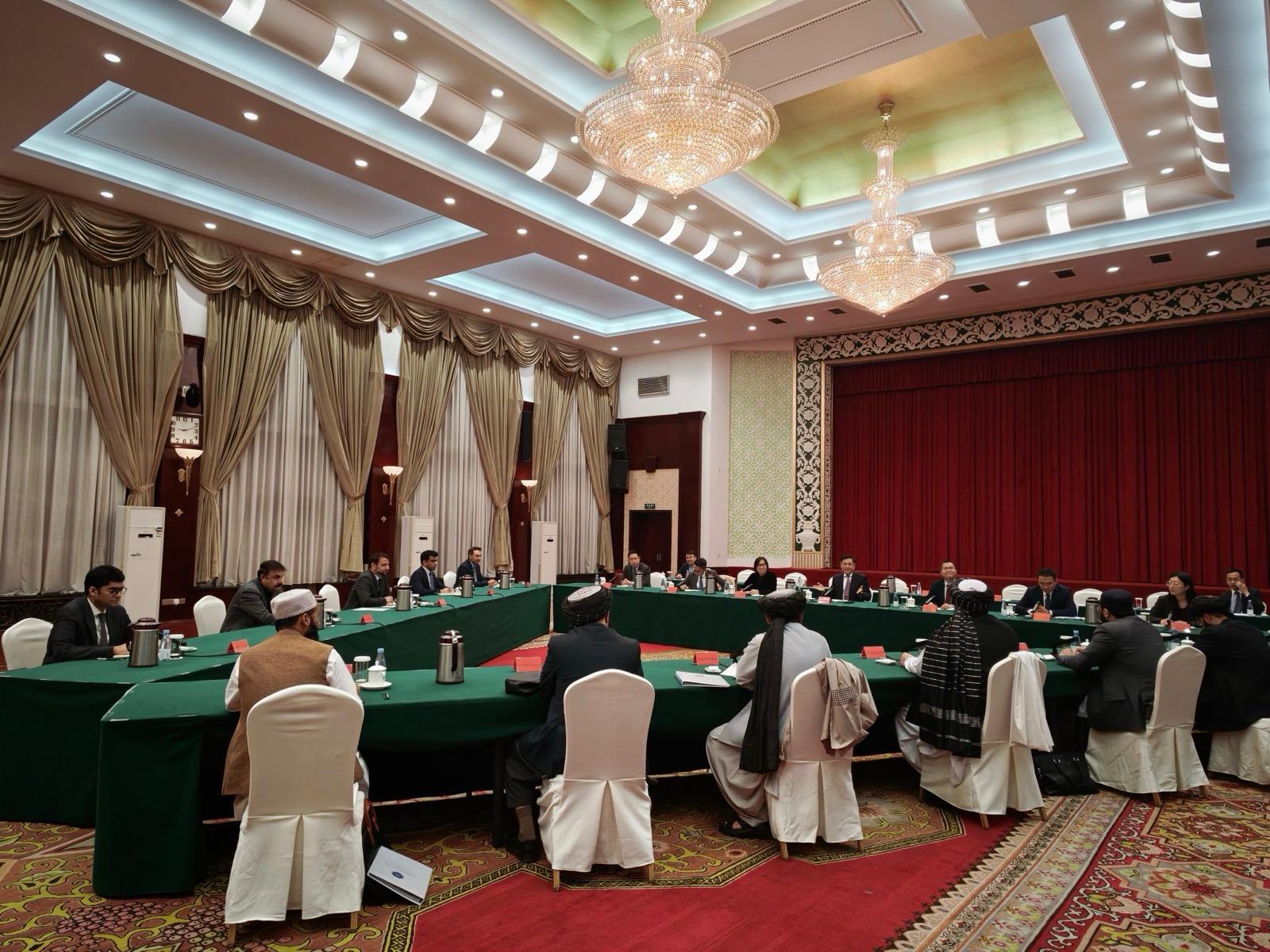
The recent week-long informal meetings at the director level in Urumqi involving Afghanistan, Pakistan, and China should be viewed in the right light. They’re not a game-changer, and it would be misleading to frame them that way. However, given the current regional climate—where tensions are running high and communication has become scarce—these talks represent a cautious yet necessary step forward that merits attention instead of being brushed aside.
The broader situation is getting more complicated by the day. The region is grappling with multiple layers of instability, particularly the escalating confrontation in West Asia between Iran, the United States, and Israel. This isn’t just a standalone conflict; it’s already starting to impact global energy flows and market stability, which has direct repercussions for South Asia, a region heavily reliant on imported energy and external economic conditions. The rising volatility in energy markets quickly translates into inflation and economic strain in economies that are already on shaky ground.
In this context, regional tensions are no longer isolated—they’re all interconnected. That’s why the timing of renewed dialogue in South Asia is so crucial.
Both Afghanistan and Pakistan are feeling the heat, albeit in different ways. Afghanistan’s struggles are nothing new; they stem from nearly five decades of ongoing instability. In that light, Afghanistan has less to lose from further decline but stands to gain significantly from a more stable and gradually normalized regional environment.
On the other hand, Pakistan is increasingly focused on managing immediate internal pressures—like economic challenges, domestic security issues, and broader regional concerns—rather than steering long-term regional strategies. This creates a scenario where sustained escalation becomes tough to uphold and even harder to manage over time.
To truly understand the Urumqi engagements, we need to look at them within a broader context. At the heart of diplomacy in these kinds of situations, it doesn’t kick off with grand political agreements. Instead, it starts off slowly, often at the technical or director level, where the goal isn’t necessarily to reach an agreement but to keep the lines of communication open. As pointed out in “Diplomacy: Theory and Practice” by Berridge, when trust is low and political space is tight, taking small, incremental steps is often the only viable option. The main aim here is straightforward: to avoid a complete breakdown in communication and to ensure that dialogue remains possible, even when things get tough.
The Urumqi format embodies this approach. Its significance lies not in the results it produces, but in the process itself—keeping structured communication alive at a time when misunderstandings and distrust could easily shut everything down.
China plays a crucial role in facilitating this process, but it’s important to view this role in a nuanced way rather than oversimplifying it.
Historically, Afghanistan and China have a long history of civilizational interaction, built on centuries of regional connectivity, trade, and cultural exchanges throughout Asia. This rich historical backdrop has fostered a generally friendly and non-confrontational relationship between the two nations. Additionally, China’s well-established ties with Pakistan provide a second stable foundation for engagement. Together, these relationships give China a unique position of familiarity and access on both sides.
On the political front, China’s non-interventionist stance in its immediate neighborhood is equally significant. In a region where outside involvement is often met with skepticism, China’s focus on sovereignty and non-interference has helped cultivate a perception of restraint. This, in turn, opens up space for dialogue where other mediators might find it challenging to remain neutral.
China’s principled stance on achieving win-win outcomes is especially significant in the context of negotiations between Afghanistan and Pakistan, as the days of zero-sum thinking are mostly behind us. When these talks are truly rooted in a win-win mindset, they’re much more likely to yield positive and constructive results by focusing on shared interests, building trust, and fostering sustainable cooperation in a world that’s becoming increasingly multipolar and multilateral.
When it comes to strategy, China has a vested interest in keeping the region stable. The instability in Afghanistan and Pakistan has a ripple effect on connectivity, economic planning, and long-term development efforts. This shared interest in stability not only positions China as a facilitator but also as a key player in maintaining ongoing engagement.
From Afghanistan’s viewpoint, participating in these processes is driven by both necessity and a sense of trust in certain regional partners. Generally, Afghanistan is open to working with those it sees as balanced and non-coercive. China, in this context, stands out as a relatively stable partner that values continuity and dialogue over pressure tactics.
On a larger scale, the global landscape is gradually shifting towards a more multipolar and regionally focused structure. In this changing environment, regional players are taking on more responsibility for their own stability instead of relying on outside assurances.
For Afghanistan and Pakistan, this isn’t just a theoretical concept. Their close geographic and regional ties create a constant state of interdependence. Economic interactions, security issues, and political changes in one country inevitably impact the other.
This is why escalating tensions often lead to diminishing returns. It ramps up pressure on both sides while limiting opportunities for constructive dialogue. In contrast, even minimal communication can help keep options open and prevent further decline.
The Urumqi engagements should be seen as a small but significant step in this direction. They may not resolve fundamental disputes or lessen deep-rooted mistrust, but they do show a willingness to keep the lines of communication open at a technical level.
The real challenge now is not to read too much into these discussions but to keep them going. If these processes continue, they could gradually pave the way for more structured engagement down the line. Ultimately, the core reality remains unchanged.
Afghanistan and Pakistan are deeply intertwined in their regional dynamics. Their stability is linked, and their paths are not independent of one another. So, engaging with each other isn’t just a choice—it’s a necessity. The Urumqi process should be viewed as a careful yet significant effort to keep the lines of diplomacy open, especially when the region can least afford to lose that connection.