
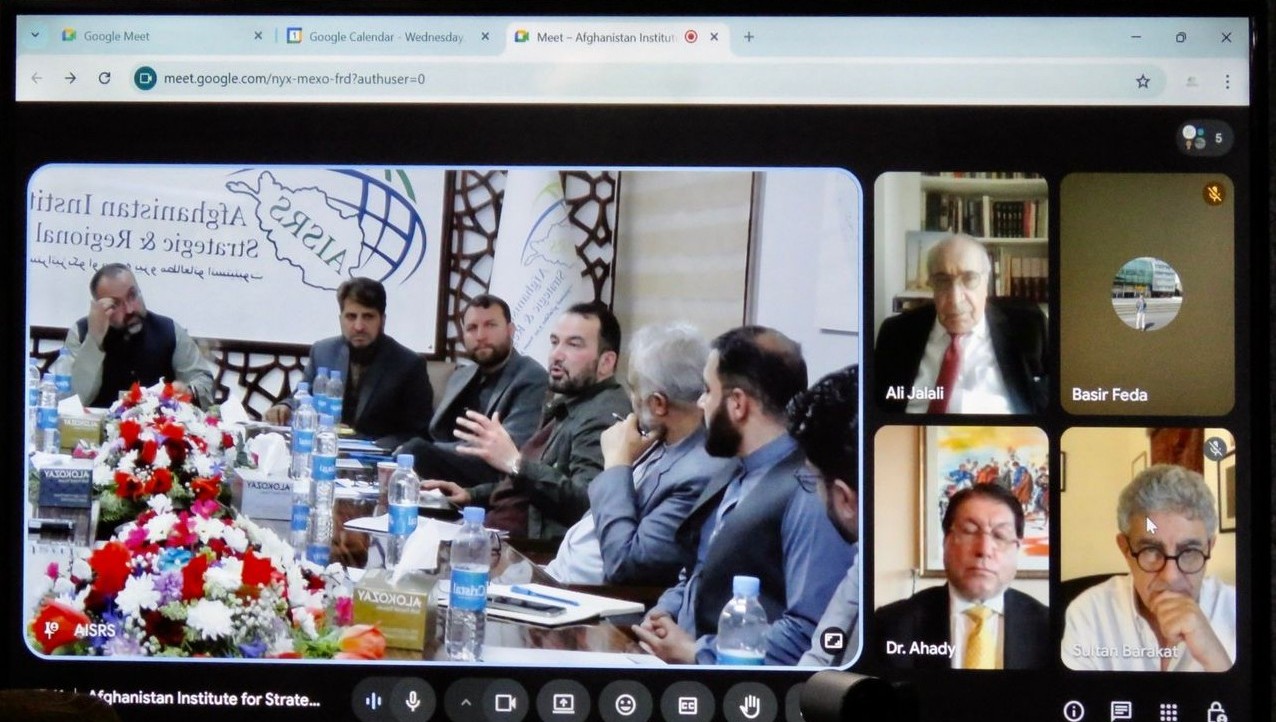
The Afghanistan Institute for Strategic and Regional Studies (AISRS) organized an academic and analytical discussion under the above title to examine recent geopolitical developments and their broader implications. The event was held on 12 Hamal (April 1, Wednesday), bringing together university professors, researchers, and prominent academic and policy figures.

The Afghanistan Institute for Strategic and Regional Studies (AISRS) organized an academic and analytical discussion under the above title to examine recent geopolitical developments and their broader implications. The event was held on 12 Hamal (April 1, Wednesday), bringing together university professors, researchers, and prominent academic and policy figures.

The panel featured distinguished speakers, including Ali Ahmad Jalali, Former Minister of Interior Affairs of Afghanistan; Anwar ul‑Haq Ahady, former Minister of Finance of Afghanistan; Sultan Barakat, Professor at Khalifa University in Doha; and Baseer Feda, Head of South and Central Asia at the Berghof Foundation.

During the session, keynote speakers presented analytical and research-based perspectives addressing different dimensions of the ongoing tensions and conflict dynamics. The discussions explored political, security, and economic aspects of the crisis and assessed its wider regional and global implications.

The discussion primarily focused on a deeper assessment of regional transformations, the exchange of expert views, and the presentation of practical recommendations. Participants examined how current geopolitical shifts may influence Afghanistan, the wider region, and the international system, particularly in terms of political stability, security trends, and economic developments.